Start with the seller and the return terms
Ask for the exact model and version, current photos of both ends and the controls, and a clear list of included parts. Ask whether they've been dropped, repaired or stored wet. Photos help you ask better questions; they don't prove possession or internal condition.
For an online purchase, confirm the inspection window, return deadline, return postage and any restocking charge. Save the listing and the seller's answers. A private sale may give you no trial at all. If you can't inspect or return the pair, decide whether you're willing to take that risk.
Look past the worn paint
Check for cracked parts, dented lens rims, damaged strap attachments and missing eyecups. These deserve more attention than ordinary marks on the body.
In diffuse daylight, inspect the objective lenses and eyepieces without touching the glass. Look for scratches, chips, cloudy patches or marks that appear inside. Check whether a mark is on the surface or appears inside; don't rub it to find out.
Damp storage can encourage condensation and mold. You can't reliably diagnose fungus from a listing photo. For unexplained haze or branching marks, ask for a service assessment or pass. Don't assume cleaning will be cheap. [S4-O09]
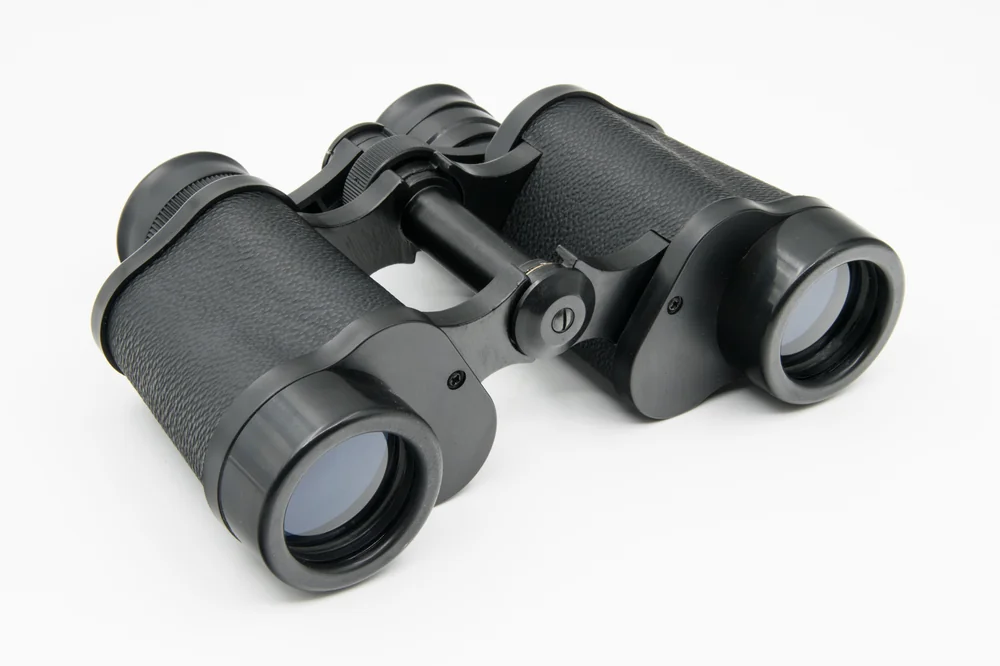

Work every control you will use
| Part | Quick check |
|---|---|
| Hinge | Adjust it to your eye spacing; does it stay there? |
| Focus | Refocus between ordinary near and distant subjects; does it move smoothly? |
| Diopter | Follow the model's setup instructions; can you reach the setting you need? |
| Eyecups | Check both sides through their intended positions; do they hold? |
Some binoculars focus each eyepiece separately. Check the manual rather than expecting every pair to have a central wheel. Never force a control beyond its stop. [N13] [S4-O09]
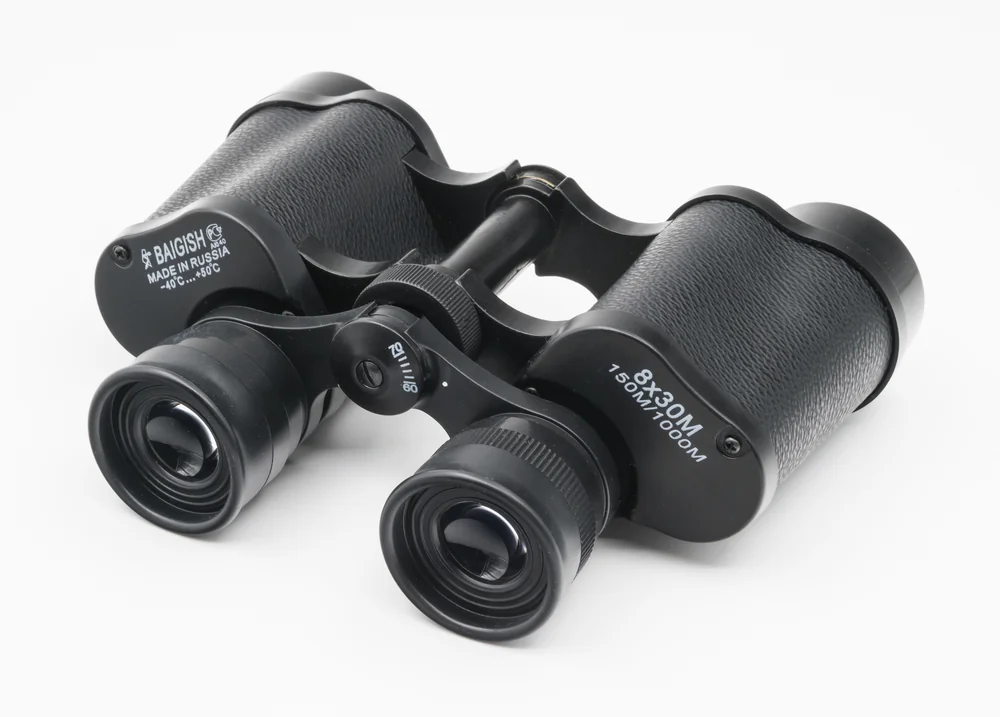

Take a proper look through them
Use an ordinary daylight subject, safely away from the Sun. Set the eyecups, hinge and diopter for your eyes, following the model's instructions. [N13] [S4-O09]
Can you get one relaxed image with both eyes open? Can each side focus, and can you use them comfortably for a few minutes? Wear the glasses you actually observe with. For moving black edges, try the eye-position checklist first.
If the view remains doubled or uncomfortable, stop the trial. Don't force the images together or try internal adjustment screws. This is a buying check, not a measurement of optical alignment; let a service technician investigate.
Check what “lifetime warranty” means here
Ask the manufacturer whether this exact model is covered for a second owner in your country, and what proof of purchase is required. Get the answer before treating warranty coverage as part of the deal.
For example, Nikon US's binocular summary refers to the original consumer's purchase from an authorized dealer. Vortex's VIP page has its own terms and excludes loss and theft. Check both who is covered and what is covered. [USED-NIKON-WARRANTY] [USED-VORTEX-WARRANTY]
Buy, ask for more information, or walk away
Buy when the pair fits, the checks are satisfactory, and the terms work for you. Pause over unexplained optical marks, damaged controls or unanswered questions. Walk away from a pair that needs a repair you haven't priced.
Compare the total cost with a suitable new option, including missing parts and delivery. Our binocular budget guide covers that separate spending decision.