What does the problem look like?
A steady circular edge around the view is normal. Shadows cutting into that circle are the part to check. Use this table as a starting point. [N11]
| What you see | Check first |
|---|---|
| Dark crescents that move as your head moves | Eye position and eyecup height. |
| A small, tunnel-like view | Your eyes may be too far from the eyepieces, especially with glasses. |
| Two overlapping circles | The spacing between the barrels. |
| A full circle, but blurry detail | Focus and the diopter setting. |
These symptoms can overlap. Work through the adjustments below, changing one thing at a time. [N13] [BLACKOUT-EYE]
1. Start with the eyecups
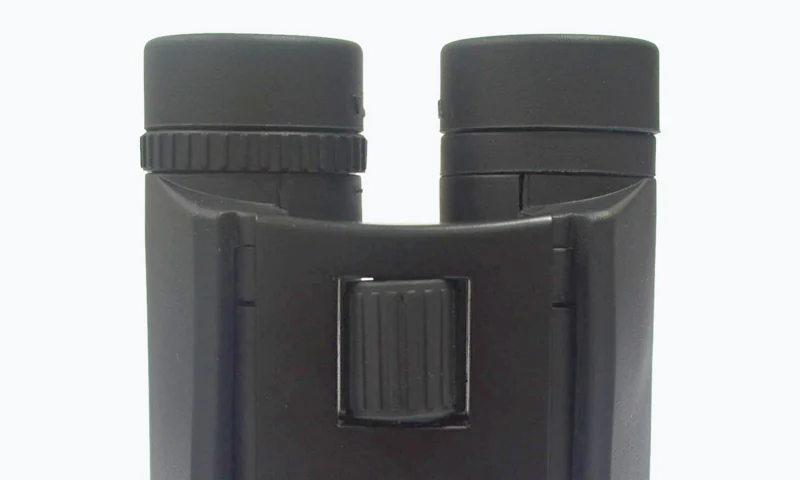
The eyecups are the rims around the small lenses you look through. They help keep your eyes at the right distance.
- Without glasses: start with the eyecups extended.
- With glasses: start with them retracted, so your glasses can sit closer to the eyepieces.
Those are starting positions. If your binoculars have intermediate stops, try them until the whole view feels easy to hold. Some eyecups twist; others fold. Follow your model's instructions rather than forcing them. [N11] [N13]
Use a distant, stationary target for the checks. Never point binoculars at the Sun. [SAFE01]

2. Bring the two circles together
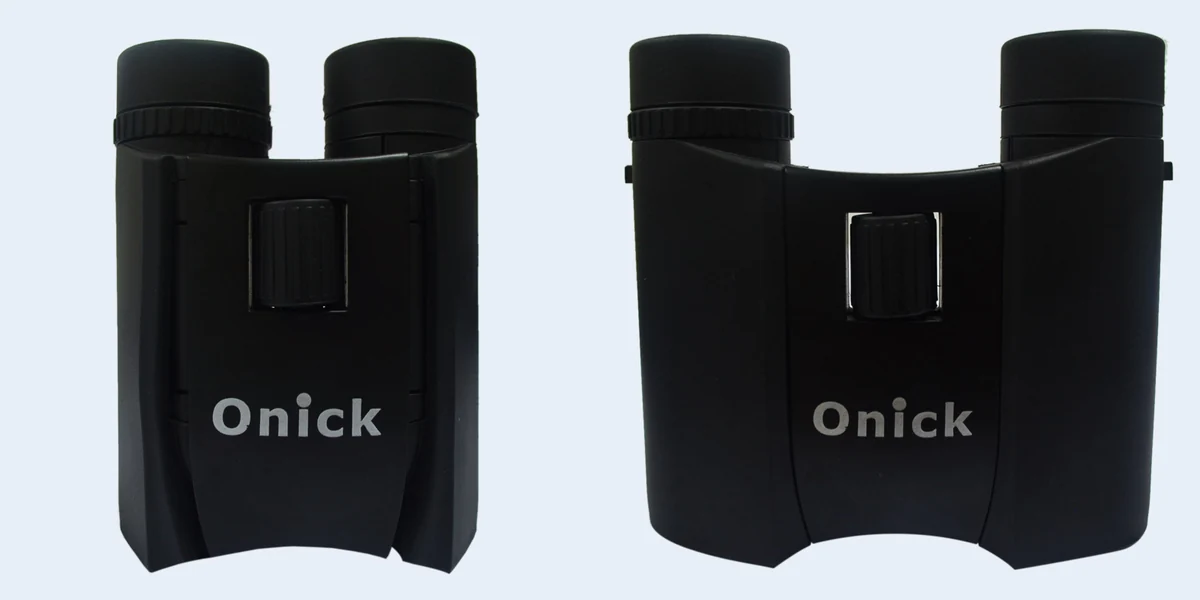
Look through both eyepieces and gently open or close the hinge until the two fields form one circle. The name for this setting is interpupillary distance, or IPD; it simply means matching the eyepiece spacing to your eyes. [N13]
You don't need to measure it first. Adjust by looking, and check it again if someone else has used the binoculars. If the hinge reaches its limit before the spacing feels right, that model may not fit you.


3. Ease forward or back a little
Keep looking at the target and move the binoculars slightly closer, then farther away. Watch what happens to the shadow.
Too close can bring dark patches in from the sides; too far back can narrow the view. If one edge stays dark, recenter your eyes behind the eyepieces and recheck the hinge spacing. The aim is a full view with your eyes centered behind the eyepieces. [N11] [BLACKOUT-EYE]
Eye relief is the distance from the eyepiece lens to the position where you can see the full field. Changing the eyecups changes where your eyes sit; it doesn't change the binoculars' optical eye relief. [N11]
Wearing glasses? Check the whole view
Can you see the whole circular field without pressing the binoculars into your glasses? If the edges stay cropped, you may need a model with more usable eye relief. Your frames, face shape and the eyecup design all affect the result, so a specification in millimeters can't settle the fit on its own. [N11] [BLACKOUT-EYE]
Still blurry? Now check focus
Once the view is full and comfortable, focus on a detailed target.
On many center-focus binoculars, you first focus the eye without a diopter adjustment using the center wheel, then adjust the other eye with the diopter control. After that, use the center wheel as the target distance changes. Follow your manual for the exact controls; individual-focus models work differently. [N13] [N21]
If a dark crescent remains, recheck your eye position and eyecups. For more on the controls, see our binocular fit and focusing guide.
If you still can't get comfortable
Try another pair, if possible, before spending more. A different fit can matter more than a higher price.
If the target stays doubled or viewing causes strain after normal adjustment, stop and ask the retailer or manufacturer to check the pair. Don't force your eyes to merge the images or attempt prism adjustment yourself.
Still choosing? Use the binocular guide for the wider fit checklist, or 8×42 vs 10×42 to compare power and field of view.