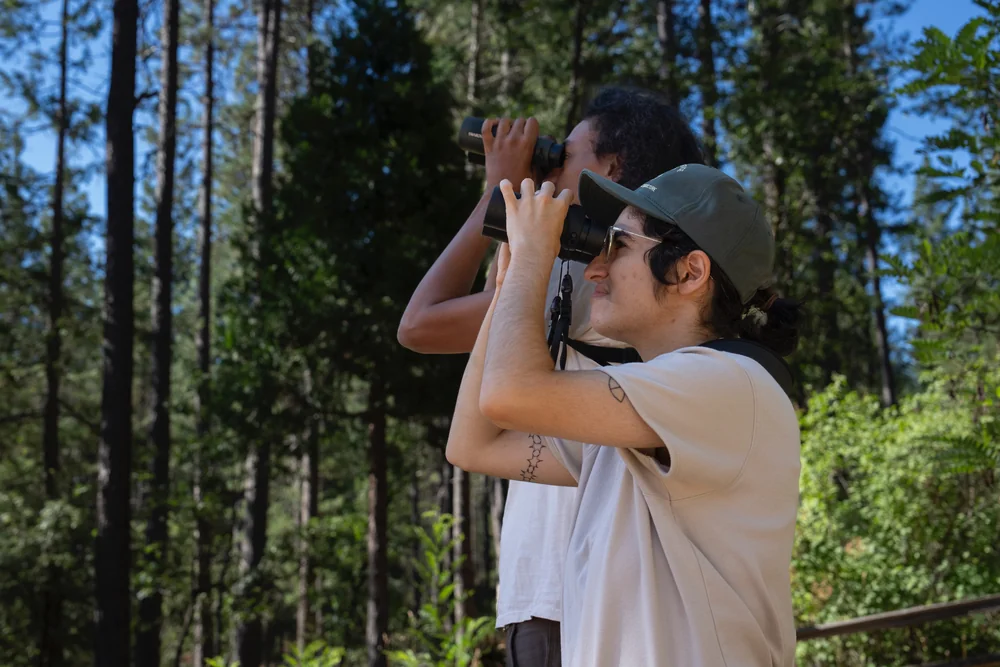
Same power, different front lenses
The 32 and 42 are the objective-lens diameters in millimeters. Both give the same nominal image scale. The 42 mm objectives provide a larger light-gathering area; neither label specifies a maximum useful viewing distance. [N18] [N19]
| Nominal specification | 8×32 | 8×42 |
|---|---|---|
| Magnification | 8× | 8× |
| Objective diameter | 32 mm | 42 mm |
| Calculated exit pupil | 4 mm | 5.25 mm |
The exit pupil is the small circle of light behind each eyepiece. Divide objective diameter by magnification to calculate it: 32 ÷ 8 and 42 ÷ 8. [N02]
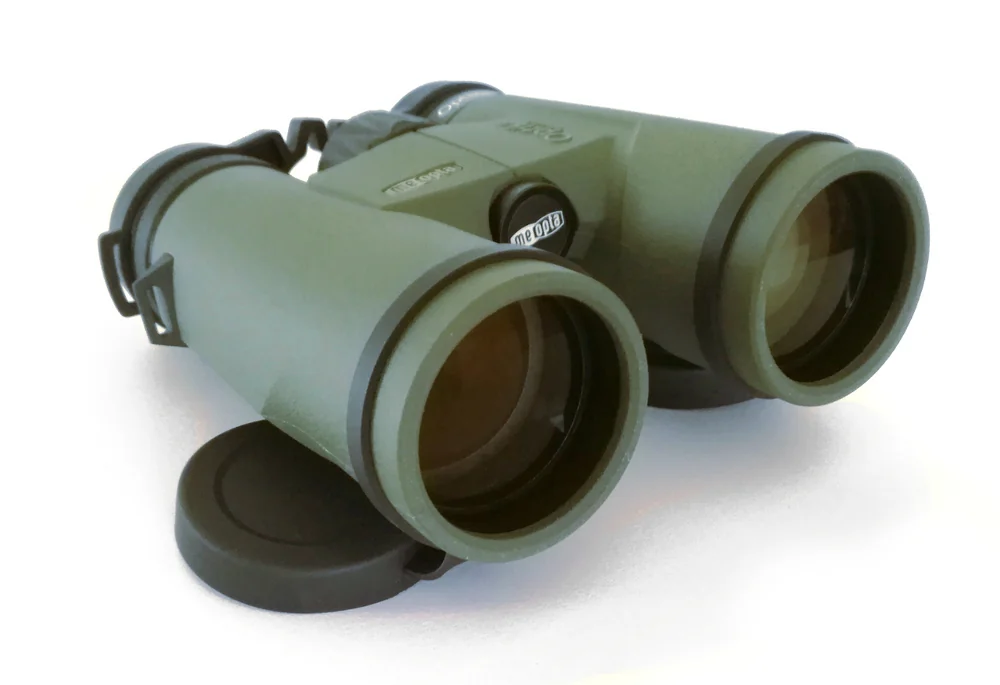

Will you notice the difference in daylight?
In bright daylight, your pupils are smaller, so the larger exit pupil of an 8×42 may offer little brightness benefit. That makes an 8×32 a sensible pair to try for daytime birding, hiking and sightseeing. [N02]
As light fades and your pupils open, the larger exit pupil can become more useful. If you often stay out until dusk, compare the two in that light rather than deciding under bright shop lighting. [N02]
Actual brightness also depends on optical design and coatings, which affect how much light reaches your eyes. Compare the view in your usual conditions alongside the calculated exit-pupil figures. [N03]
Compare the actual size and field
Smaller front lenses can mean a smaller package, but compare the exact models. The designation alone doesn't tell you the weight, how the body fits your hands or whether it fits your bag. [N19]
For example, Vortex lists its Diamondback HD 8×32 at 15.9 oz, versus 21.8 oz for the 8×42. Their listed real fields are 8.1° and 7.5°, respectively. These are manufacturer specifications, checked October 19, 2026. They describe this pair of models. [SIZE-VORTEX-8X32] [SIZE-VORTEX-8X42]
That smaller model also has the wider listed field. Don't extend this to every 32 mm pair: field of view is a separate specification. Compare degrees, or widths quoted at the same distance. [N10]
A comfortable view still comes first
Exit-pupil diameter and eye relief are different things. Eye relief is the distance from the eyepiece to the eye position for the full view. It matters when glasses hold your eyes farther back; a 42 mm objective doesn't guarantee better glasses fit. [N11]
Try both wearing your usual glasses, if applicable. Can you raise the binoculars and get one complete circle without pressing hard or searching for the right position? Can you reach the focus wheel without changing your grip?
If black crescents keep cutting into the view, follow the eyecup and eye-position checklist before judging either size.
Which would you actually carry?
Start with 8×32 when most outings are in daylight and space or carrying weight is what makes you leave binoculars behind.
Start with 8×42 when early mornings and fading light are regular parts of your use, and the particular pair feels comfortable to carry.
Before buying, hold each for a few minutes, refocus between near and distant subjects, and check the bag or strap you'll use. A larger body may suit your hands better; a smaller one may suit your outing better. Choose the pair that makes the whole routine easier.
Still deciding on power? 8×42 vs 10×42 covers that separate choice.