Start with the tripod you have
With the scope mounted according to its manual, try a stationary target at the height and magnification you expect to use. Turn the focus control, let go, then watch the view. Can you aim smoothly, keep the target in place and see detail once movement settles? [N14]
If the head slips, the view keeps shaking or you have to stoop, identify that limit before replacing the whole setup. Count the scope, eyepiece and attached accessories against the head’s limit, and everything the legs carry against their limit. Do not test an overloaded or damaged support. [TRIPOD-PAYLOAD]
Check the fittings—and the plate
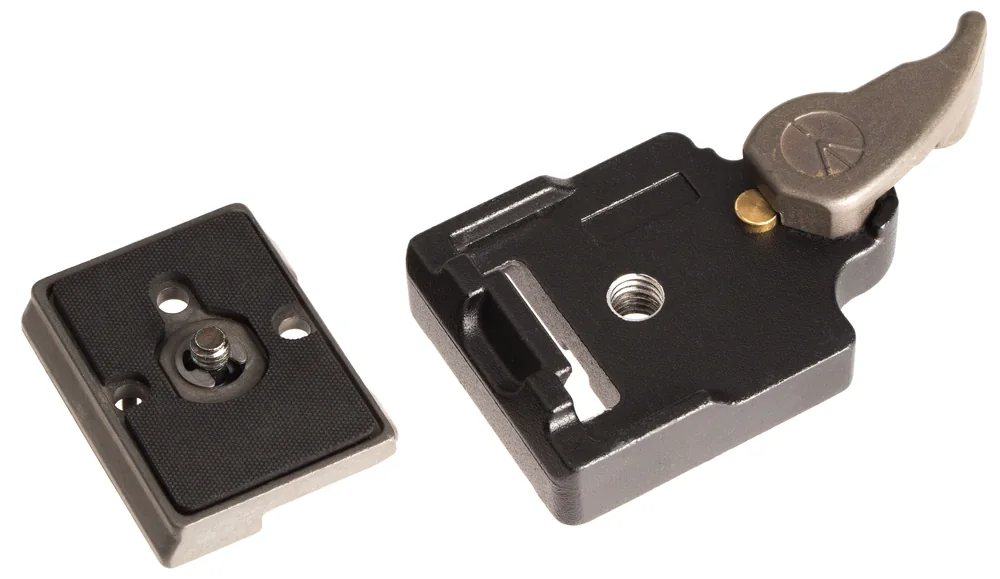
There are separate connections to check. A screw that fits the scope does not make every quick-release plate interchangeable.
| Connection | What to check |
|---|---|
| Scope to plate or head | The mounting screw must match the scope foot and secure it as the manual specifies. |
| Plate to clamp | Match the plate system to the head. Check the exact model, not just a similar-looking shape. |
| Head to tripod legs | If changing the head, confirm the fitting underneath it matches the tripod. Some kits have a fixed head. |
Specifications may list both 1/4-inch and 3/8-inch fittings. Check which connection each size describes. For example, a head can have a 3/8-inch underside fitting and a different screw on its scope-side plate. Use only adapters approved for the actual combination. [TRIPOD-FLUID] [TRIPOD-BALL]

Pan head, fluid head or ball head?
For scanning a shoreline or following a bird, try a head that lets you pan horizontally and tilt vertically without losing control of the scope.
| Head type | What matters in use |
|---|---|
| Pan-and-tilt | Separate movement axes can make scanning easier. Check how the controls work with your scope. |
| Fluid pan-and-tilt | Uses damping to control pan and tilt. Check the drag and balance at the tilt angles you need. |
| Ball | Lets you reposition in several directions. Some also have a separate pan control; check whether locking shifts the target. |
“Pan” describes movement; “fluid” describes damping. They are not mutually exclusive, and a pan head is not necessarily fluid. A ball head you already own is worth trying if it holds position and is comfortable to control. Support the scope when releasing a head lock. [TRIPOD-FLUID] [TRIPOD-BALL]
Choose the height you will actually use
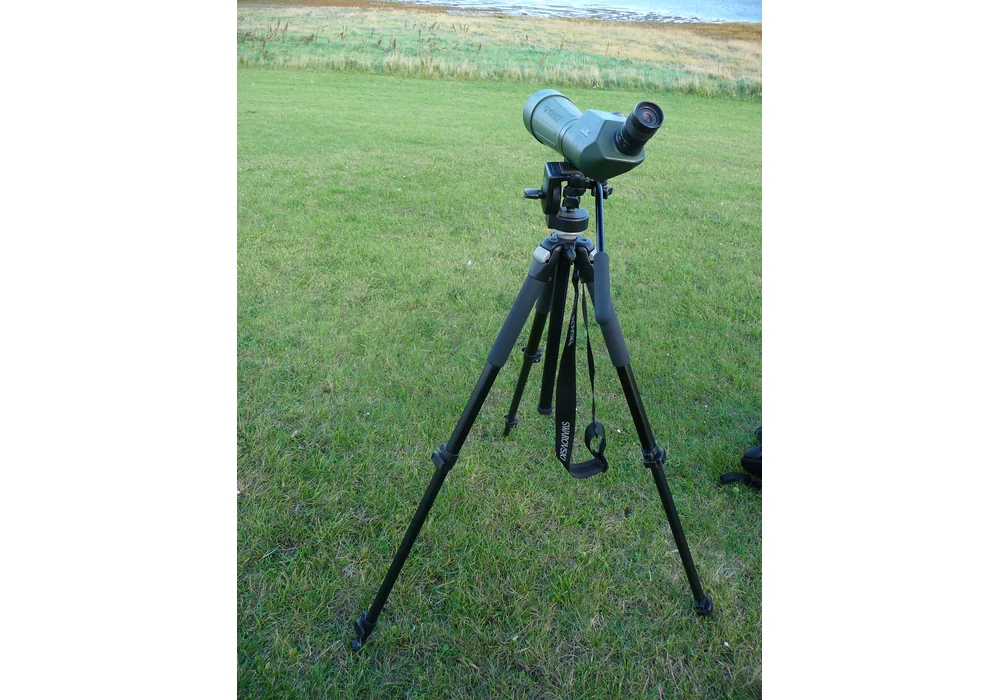
Try the eyepiece while seated or standing as intended. An angled scope can allow a lower tripod position and easier sharing; a straight scope needs its eyepiece closer to eye level. Check your posture with the actual scope, not just the tripod’s advertised maximum height. [N15]
On a head with a sliding plate, follow its instructions to position and balance the load before adjusting the movement controls. A phone or other accessory can change that balance. Use firm, secure footing. [TRIPOD-FLUID] [N14]

Load capacity is not a steadiness score
Use the published load limits as limits. They do not tell you how much the image will shake in wind, at full height or while focusing. A safety-payload test and a comfortable high-magnification view answer different questions. [TRIPOD-PAYLOAD] [N14]
Count the head, plate and accessories in the setup you will carry. A lighter arrangement only helps if you can still use it comfortably. Before buying, try the full combination if possible: attach, aim, focus, lock, then pack it away.
Still seeing movement? Use the support troubleshooting checks. For the full purchase cost, see the spotting-scope budget guide.